
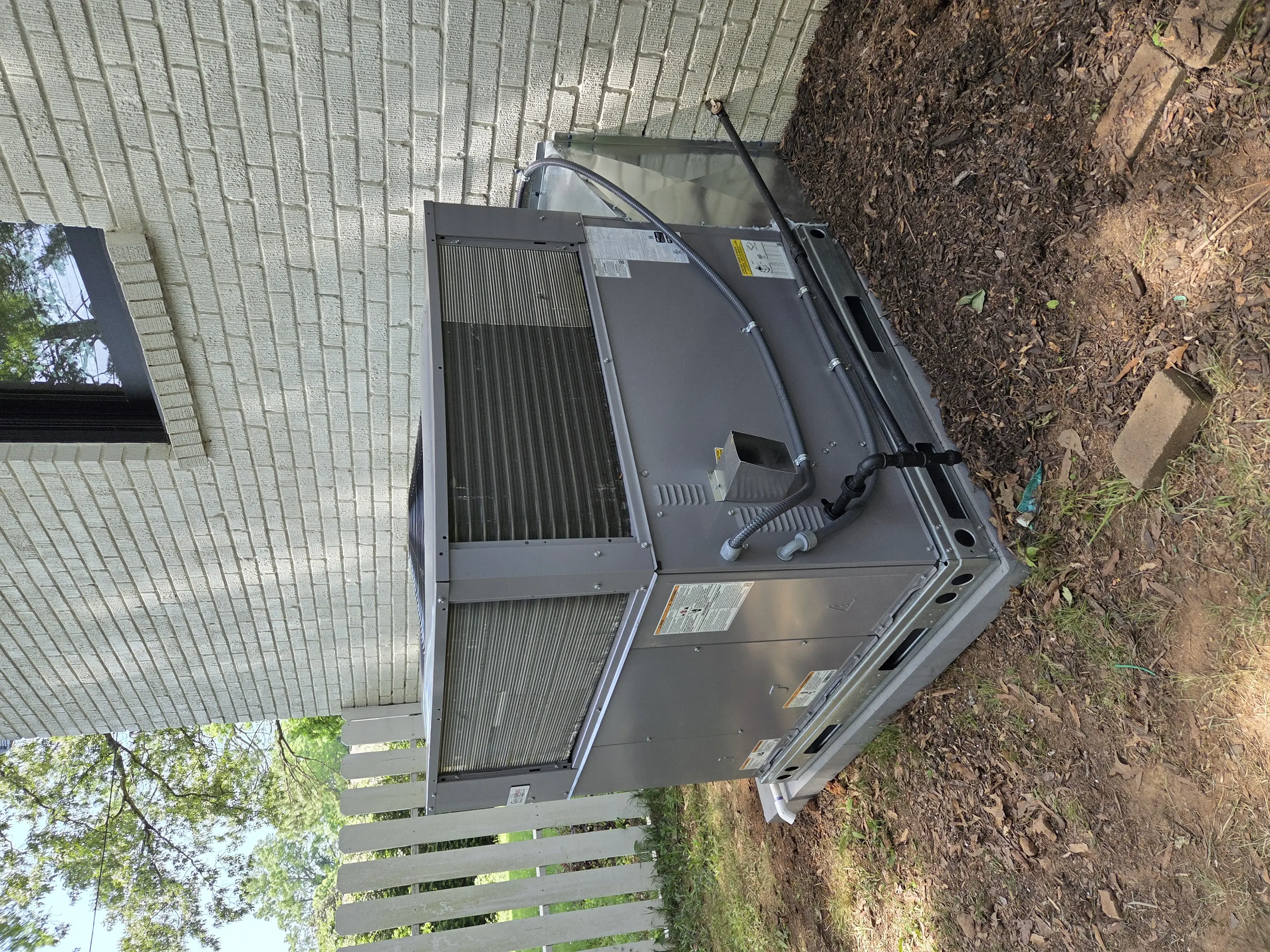

A clear comparison of heat pumps and gas furnaces for homes in the Charlotte metro and greater North Carolina Piedmont, covering upfront cost, operating cost, cold-snap performance, and service life.
Quick Answer
For most homes in the Charlotte metro and the broader North Carolina Piedmont, a modern heat pump now delivers lower operating cost, better performance across mild winters, and a smaller carbon footprint than a gas furnace. Gas still wins in specific cases — homes with an existing high-capacity gas line, families who prefer the heat quality of combustion air, or mountain properties with regular sub-20°F overnight lows.
Upfront Cost: Gas Furnaces Are Cheaper to Install
On the install day itself, a gas furnace and matched air conditioner is typically less expensive than a heat pump with matched air handler, assuming the home already has a natural gas line and chimney or high-efficiency venting in place. The equipment is simpler, the installation labor is lower, and the heat pump's dual-function design commands a price premium.
That advantage narrows or disappears when gas infrastructure doesn't already exist. Running a new gas line, replacing a failed flue, or upgrading venting to meet current code can add thousands to a gas install — and in homes without existing gas service, the heat pump is often the cheaper total project. Federal tax credits under the Inflation Reduction Act also apply to qualifying heat pumps but not to gas furnaces, which further shifts the math.
- Gas furnace + AC, existing infrastructure: typically lower upfront cost
- Heat pump + air handler: higher upfront, but eligible for federal tax credits on qualifying ENERGY STAR models
- No existing gas line: heat pump is often the cheaper total project once infrastructure cost is included
Operating Cost: Heat Pumps Win on Most NC Winter Days
A heat pump moves heat rather than generating it, which is why a well-sized modern heat pump can deliver 2.5 to 4 units of heat for every unit of electricity it consumes (the coefficient of performance, or COP). A gas furnace can't exceed 100% conversion efficiency — top-tier condensing furnaces reach 95–98% AFUE. At the electricity-and-gas prices Charlotte-area homeowners typically see, the heat pump's COP advantage usually translates to lower monthly heating bills on all but the coldest nights.
North Carolina's climate is where heat pumps particularly shine. The Piedmont averages a significant number of winter days in the 35°F–55°F range — exactly the temperatures where heat pumps operate at their highest efficiency. Modern cold-climate heat pumps continue to work effectively down to around 5°F, which covers the overwhelming majority of Charlotte-region winter nights.
Cold-Snap Performance: Not the Deal-Breaker It Used to Be
The old rap on heat pumps — 'they don't work when it's really cold' — was earned by equipment from the 1990s and 2000s. Modern variable-speed heat pumps with enhanced vapor injection, including cold-climate models certified under ENERGY STAR's Cold Climate Specification, maintain meaningful heating capacity at single-digit outdoor temperatures.
That said, every heat pump installed in North Carolina should include supplemental heat — typically electric resistance strips or, in hybrid (dual-fuel) configurations, a gas furnace that takes over when outdoor temperatures drop below a set balance point (often 25–35°F depending on equipment and utility rates). A dual-fuel system gives you the efficiency of a heat pump on mild days and the brute-force heating of gas on cold nights.
- Standard heat pump: effective down to ~20°F; electric strips handle colder snaps
- Cold-climate heat pump: effective down to ~5°F with minimal strip-heat engagement
- Dual-fuel (heat pump + gas furnace): best total-cost answer for homes with existing gas and occasional cold spells
Service Life and Maintenance
According to the U.S. Department of Energy, gas furnaces installed and maintained properly typically last 15 to 20 years, while heat pumps generally reach 10 to 15 years. The gap exists because heat pumps run year-round (cooling plus heating), while furnaces only operate during the heating season.
Maintenance requirements are similar in scope — annual professional inspection plus homeowner filter care — but gas systems require combustion and carbon-monoxide testing that heat pumps don't. Heat pumps, in turn, require refrigerant-charge verification and defrost-cycle checks that gas furnaces don't. Neither system is meaningfully more expensive to maintain over its service life.
When a Gas Furnace Still Wins
Despite the overall trend toward heat pumps, there are specific scenarios where gas remains the right call. Homes with an existing high-capacity gas line and a strong preference for the heat quality of combustion air (which tends to feel warmer at the register than heat-pump output) often prefer to stay on gas. Mountain properties west of Charlotte with frequent sub-20°F overnight lows benefit from gas's consistent output regardless of outdoor temperature. And homeowners who value the operational simplicity of a single-function heating system — rather than a system that also handles cooling — sometimes prefer separate gas furnace and AC units.
The right comparison isn't 'gas vs. heat pump' in the abstract; it's 'what's the total 15-year cost of each option in this specific home, with this specific gas and electric rate, at this climate, with these comfort preferences.' A licensed contractor running that math honestly is worth more than a generic recommendation.
Need an Answer for Your Home?
If your system is acting up, we can diagnose the issue, explain the next step clearly, and help you decide whether repair or replacement makes the most sense.
Frequently Asked Questions
More From the Blog

Related Services & Local Pages
HVAC Equipment Installation
Review what our installation process covers, from load calculation to commissioning.
Heating System Repair
If your current furnace or heat pump is misbehaving, diagnostics come first.
Charlotte HVAC Service
Local service coverage and climate-specific HVAC details for Charlotte homes.